First, about the rain itself
A tropical downpour in Phuket does not work like rain in a temperate climate. It is usually thirty to sixty minutes of very heavy water, most often in the afternoon, and then the sky clears. Full days without a break happen, but they are rare even in September, the wettest month of the year.
What spoils a trip is usually not the rain but its consequence: in strong wind the marine authority closes the ports, and every island route is cancelled for the day. The decision is centralised, normally made the evening before or that morning, and no operator can work around it.
The right response to such a day is not to sit in the hotel waiting for it to lift but to switch to the land programme. Phuket has enough of one to fill two or three rainy days in a row without repeating yourself.
What runs in any weather
Evening shows are the obvious answer. FantaSea, Siam Niramit, Carnival Magic and the Simon cabaret run on schedule whatever the weather, the venues are indoors, and the trip is arguably more comfortable in rain because of the drop in heat. Tickets are usually taken a day or two ahead, though in low season same-day seats exist.
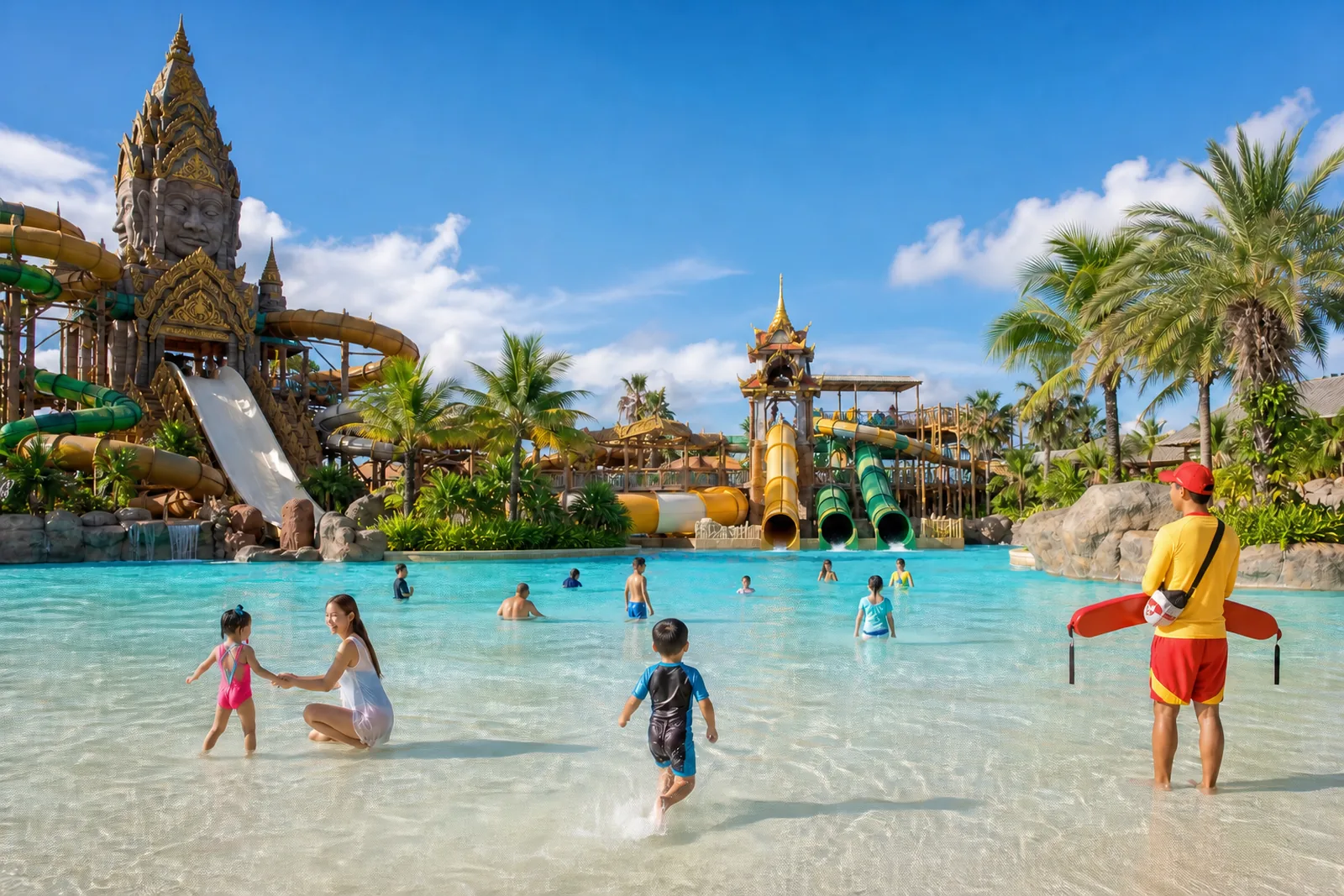
Water parks stay open and empty out. Andamanda and Splash Jungle operate normally, the pools are warm, and slide queues are a fraction of their usual length. Rides pause only for thunderstorms, and only temporarily.
The elephant park, rafting and jungle programmes are unaffected, and rafting actually improves because the water level is higher. Either way, wear clothes you do not mind ruining.
Spa and Thai massage: an hour of traditional massage in a decent place costs from 400–600 THB, and on a wet day it is what locals themselves do.
Phuket Town and the temples
The Old Town is the best place on the island under grey skies. The Sino-Portuguese facades of Thalang and Dibuk Road look better in rain than in glare, cafes and galleries sit close together, and the dash between them takes half a minute. It is also the only district really worth walking.
The Big Buddha and Wat Chalong are always open, though in rain the viewpoint at the Buddha may sit inside a cloud. That is either a disappointment or the most atmospheric shot of the trip, and there is no telling in advance.
The large malls, Central Phuket Floresta and Jungceylon in Patong, are the standard fallback, with a cinema, food courts and an aquarium at Floresta.
What to reschedule rather than push through
Sea routes (Phi Phi, James Bond, the Similans, Racha and Coral) should be moved in rough weather. Going anyway is a poor trade even when the boat sails: the crossing is punishing, the water is cloudy and snorkelling loses its point, which is the entire reason for the trip.
Viewpoints inside a cloud (Samet Nangshe and Promthep) also move, since their value is visibility and nothing else.
One practical habit that saves trips: book sea tours for the first days of your stay. A weather reschedule then still leaves spare days, instead of forcing a choice between moving and cancelling on the last one.
Small things that matter
A 20-baht poncho from any 7-Eleven beats an umbrella: wind turns an umbrella inside out within a minute. A waterproof phone pouch costs around a hundred baht and earns its keep on the island regardless.
A scooter in a downpour is a bad idea: the asphalt turns slick instantly, and most tourist accidents happen in the first minutes of rain. Taxis get more expensive in that weather, and this is the one place not to economise.
After heavy rain the sea turns cloudy for a day or two from runoff, and red flags go up on the west coast. The danger at that moment is not the swell but rip currents, covered separately in the piece on flags and tides.